Folks ask me how to enjoy birds without turning it into a project that takes more energy than it gives back. I learned the hard way that standing around “just for a few minutes” can quietly turn into not doing it at all. My knees start grumbling at about 8 minutes, and once that happens, I’m not watching anything except the clock. What finally worked for me was treating the window like a front-row seat instead of a barrier. I stopped chasing the perfect moment outside and built a simple, repeatable setup indoors: a chair that doesn’t swallow me, a clear view to one reliable landing spot, and bird food placed where I could actually see detail without squinting. That small shift didn’t just make birdwatching easier—it made it frequent. The birds didn’t need me to work harder. They just needed me to show up the same way, in the same place, often enough to feel normal.
Window-first: Pick a View That Pays Off
Not every window earns its keep for birdwatching. The best choice is the one that gives you the most action with the least fuss.
Here’s a practical checklist to choose your main viewing spot:
- You can see a “stage.” A fence line, a shrub, a small tree, a patch of lawn, even the corner where your garage meets the yard. Birds like edges and transitions.
- The distance is workable. If the main bird activity is 6–12 feet from the glass, you’ll get satisfying detail with the naked eye and excellent detail with basic binoculars.
- You can sit comfortably. Your chair should let you stand up without wrestling it. If your knees are touchy, avoid low, soft seats that make you climb out.
- You control the glare. If the glass turns into a mirror every time you sit down, you’ll spend your session adjusting everything except your attention.
- The spot is convenient. If you have to rearrange furniture, you’ll do it a few times and then quietly stop. Convenience beats ambition.
A lot of people start with the biggest picture window and then wonder why they don’t see much. Sometimes the better window is the plain one that faces the back fence and catches traffic between cover and open space. Birds move like commuters. If you can see their route, you’ll see more birds.
A small side table near the chair helps more than you’d think. Binoculars, a notepad, and a bird ID guide stay in one place, so the setup feels inviting instead of demanding.
Feeder choices for cozy chair watching
The feeder is your invitation. Placement is your strategy. You’re not trying to create a wildlife documentary. You’re building a reliable little scene you can watch from a warm chair without strain.
Option 1: Window-mounted feeder
Best for: Close-up views and quick sessions
Why it works: Birds don’t need to be far away to feel safe; they need predictability and a clear escape route.
Pros
- You see feather detail, beak shape, and posture without needing fancy gear.
- Great for chickadees, nuthatches, and finches once they accept it.
Cons
- Suction cups need clean glass and occasional maintenance.
- Some birds hesitate at first if the feeder is right on the glass.
Option 2: Pole feeder in the yard
Best for: Flexibility and multiple feeder types
A pole setup lets you hang suet, a tube feeder, and a tray feeder without turning your yard into a hardware store.
Pros
- Easy to move to find the “sweet spot.”
- You can add a squirrel baffle later if you need it.
Cons
Option 3: Feeder near cover, with a clear view
Best for: Natural bird behavior and steady traffic
Birds like to feed near an escape option. If you place a feeder 3–5 feet from shrubs or a small tree, birds can dash in and out quickly.
Pros
- Birds feel safer and return more often.
- You’ll see more quick visits, which means more overall activity.
Cons
- Too close to dense cover can create hiding spots for predators.
A simple placement rule that saves frustration
If you want strong views from a chair, place your main feeder where you can see it clearly from your chosen window without leaning forward. If you find yourself leaning and craning your neck, you’ll do shorter sessions and enjoy it less.
Make the glass work for you: glare, reflections, and safety
Windows create two common problems: glare that makes it hard for you to see out, and reflections that confuse birds.
Reduce glare without buying anything
Start with the free fixes. They often solve most of the issue:
- Darken the room behind you. Bright indoor light makes the glass act like a mirror.
- Change your angle. Move your chair a foot left or right. Small shifts can eliminate reflection.
- Use a shade like a tool. Even lowering a blind a few inches can cut the “mirror effect.”
Add simple upgrades if you need them
If glare keeps winning, these upgrades are worth it:
- Sheer curtain: Softens reflections and makes your silhouette less obvious to birds.
- Light-filtering blind: Gives you control without turning the room into a cave.
- Anti-collision window markers: Birds sometimes strike glass when they see reflected sky or trees. Markers make the surface readable.
A helpful guideline is to make the glass look “busy” enough that birds recognize it as a barrier. A couple of tiny decals won’t always do it. A consistent pattern works better.
About bird strikes
If you ever hear that sudden thump, treat it as information, not a mystery. Adjust the setup. Make the window more visible. Consider moving the feeder closer to the glass or farther away, depending on your layout. The goal is to keep birds from building up speed toward what looks like open air.
A sit-down routine that makes birds feel safe
Birds notice patterns. If you pop up, pace around, and wave your arms, they’ll stay jumpy. If you approach the same way and settle into the same spot, you become part of the background.
Here’s a simple routine that works well, especially if you get tired quickly:
- Sit down first. Get comfortable before you raise binoculars or move around.
- Pause for 30 seconds. Let the yard settle. Birds often return quickly once motion stops.
- Scan with your eyes. Use binoculars only when you need detail.
- Pick one thing to follow. Watch a single bird from arrival to departure. You’ll learn behavior faster than you think.
- Keep sessions short and repeatable. Ten minutes done often beats one long session that leaves you sore.
This routine turns birdwatching into something you can do any day. Consistency is what teaches your brain the patterns: who arrives first, who feeds quietly, who bullies, who waits their turn.
Birds you’ll recognize fast in a typical US yard
You don’t need rare birds for satisfying birdwatching. The everyday birds are the ones that teach you the quickest because they show up again and again.
Here are some common backyard regulars across much of the US:
- Northern Cardinal: Bold presence, strong crest, often feeds low and near cover.
- American Goldfinch: Active at tube feeders, especially with nyjer, and often travels in small groups.
- Black-capped Chickadee: Quick grab-and-go feeder visits and lots of personality.
- White-breasted Nuthatch: Moves headfirst down trunks and loves suet.
- Downy Woodpecker: Small woodpecker that visits suet and sometimes a seed feeder.
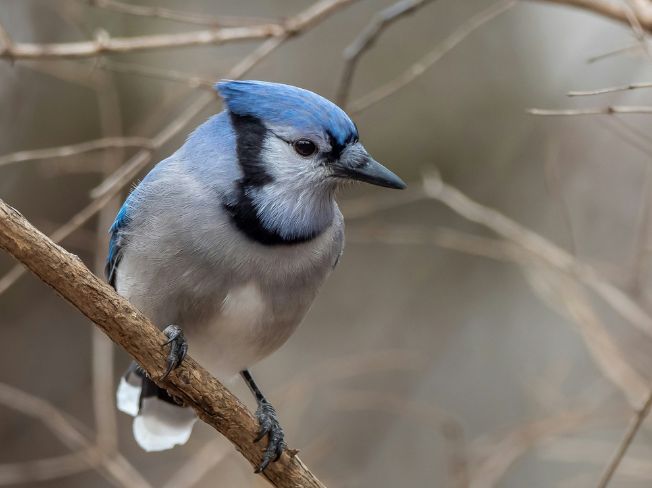
- Blue Jay: Loud, smart, and often a seed thief with style.
- Mourning Dove: Gentle, steady, and often prefers platform feeders or spilled seed.
- House Finch: Social feeder bird with streaky coloring and frequent visits.
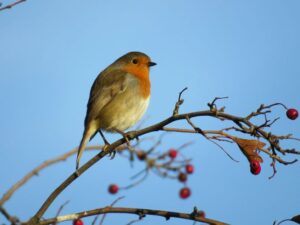
- American Robin: More of a lawn bird than a feeder bird, but easy to spot from a good window view.
If you’re learning identification, focus on three things:
- Size: Sparrow-sized, robin-sized, or crow-sized is enough to start.
- Color blocks: Red head, black cap, white belly, bold wing bars.
- Behavior: Does it cling, hop, strut, peck, grab-and-fly, or stay-and-chew.
Behavior is often the fastest clue. A nuthatch looks like a nuthatch partly because it moves like one.
The wrong try that taught me what matters
At first, I placed my feeder too far out because I thought distance would feel more “natural.” Birds came, but they were small, indistinct shapes, and I couldn’t enjoy the details. I’d lift binoculars, lose the bird, refocus, and miss the moment. The whole thing became a blur of effort.
Here’s what I learned: for viewing from indoors, closer is usually better. Close doesn’t mean chaotic. Close means you can actually see posture, beak shape, and the little habits that make birds interesting.
I’ll admit, the suction cups irritated me the first week.
The other lesson was food quality. Some seed mixes look like a bargain until you realize half the bag is filler that birds toss aside. A cleaner, higher-quality seed brings steadier visits and less mess underneath.
Troubleshooting: 5 common problems and simple fixes
A new setup rarely works perfectly on day one. Most issues have straightforward fixes.
1) “No birds are coming”
Fixes
- Give it time. New feeders can take 7–14 days to become part of the landscape.
- Start with black oil sunflower seed. It’s a strong general option for many species.
- Add suet, especially in cooler months, to draw woodpeckers and nuthatches.
- Make sure the feeder is visible from above, not tucked under an overhang where birds won’t notice it.
2) “Squirrels are taking over”
That’s normal. If you live in the US, squirrels will eventually find any feeder.
Fixes
- Place the feeder away from jump points like fences and low branches.
- Use a baffle on a pole setup.
- Consider safflower seed if the birds you want will eat it and your squirrels dislike it.
- If you want fewer battles, a weight-activated feeder can help, though they cost more.
3) “Raccoons are causing trouble at night”
Raccoons are strong, clever, and persistent.
Fixes
- Bring feeders in at night when possible.
- Avoid leaving piles of seed on the ground.
- If your feeder is on a pole, a good baffle helps, and distance from climbable surfaces matters.
4) “Glare is ruining the view”
Fixes
- Turn off lights behind you during viewing.
- Shift your chair angle by a foot.
- Add a sheer curtain or adjust blinds so the room behind you is darker.
5) “Too much mess under the feeder”
Fixes
- Switch to a higher-quality seed with less filler.
- Use a tray feeder with a catch area.
- Place a simple ground tray if you want to keep the area cleaner and still feed doves.
Troubleshooting works best when you change one thing at a time. Move the feeder, then observe for a few days. Change seed, then observe. Small adjustments add up quickly.
Comfort upgrades and money-time trade-offs
Comfort is not an extra. Comfort is what makes you return to the chair and watch again tomorrow.
No-cost comfort upgrades
- Put a small footstool under your feet.
- Use a pillow or rolled towel behind your lower back.
- Keep binoculars on a side table so your shoulders stay relaxed.
Low-cost upgrades that matter (USD ranges)
- $10–$25: A laminated backyard bird ID chart or a simple field guide.
- $15–$40: A basic window-mounted feeder from a reliable brand.
- $20–$60: Light-filtering blinds or a glare-reducing shade adjustment.
- $30–$80: A pole and hook setup so you can position feeders precisely.
Bigger upgrades if you want less daily hassle
- $80–$200: Binoculars that focus smoothly and feel light in your hands.
- $150–$300: Squirrel-resistant feeders that reduce refills and seed loss.
Now for the time trade-off, which matters just as much as money.
- If you want more birds: Put energy into feeder placement and food quality.
- If you want better viewing: Put energy into glare control and making the window readable.
- If you want to do it more often: Put energy into the chair setup and convenience.
You can’t buy consistency. You build it by removing friction. Once the routine is easy, you’ll do it even on days when your energy is low.
A quick note on temperature and comfort
If it’s 15°F outside and the driveway looks slick, indoor birdwatching stops feeling like a compromise. It becomes the smart version of the hobby. You can watch birds, stay comfortable, and keep your body happy.
Why this approach works so well
When you watch from the same place regularly, you stop seeing “random birds” and start noticing patterns.
- Cardinals often arrive as pairs and keep a watchful distance before feeding.
- Chickadees tend to dart in, grab one seed, and leave to eat elsewhere.
- Goldfinches can be picky about feeder type and seed freshness.
- Blue jays often act like scouts, checking the area before settling in.
You’ll also notice the small stuff that makes birdwatching satisfying: a downy woodpecker choosing the same suet corner, a nuthatch approaching from the same trunk, a dove lingering beneath the feeder like it owns the cleanup job.
The biggest advantage is that you can watch longer without discomfort. That’s what turns “seeing birds” into “knowing your birds.” It becomes familiar, calming, and surprisingly rich.
Ending: keep it simple, keep it kind to your body
If you’re aiming for cozy viewing from a warm chair, you don’t need a complicated plan. Start with one good window and one dependable feeder spot. Make sure you can sit comfortably without leaning forward or straining your knees. Reduce glare so the glass stops fighting you. Then repeat short sessions often enough that the birds treat you as part of the background.
Give your setup time to settle. Most yards change slowly, not instantly. The first week might feel quiet. Then one day a chickadee becomes a regular, a cardinal shows up with purpose, and suddenly you’ve got a little neighborhood of feathered routines happening right outside your glass.
Keep your expectations small and steady. Ten minutes of relaxed watching can reset your whole day. Over time, you’ll recognize birds by shape and behavior before you even think about names. That’s when it starts to feel less like a hobby and more like a comfortable habit you can keep, season after season, without paying for it in sore legs or drained energy.