This morning I was sitting at my kitchen table in Duluth with a cup of coffee and a slice of toast, just taking my time the way I do now. The light was slow coming in—December does that up here. It’s not like summer where the sun pops up early and acts like it owns the place. In winter it kind of creeps in, pale and quiet, like it’s checking to see if the wind is going to behave.
I’d just wiped a little fog off the window with the edge of my sleeve when I noticed a small flash of color out by the lilac bush. Not a big bird. Not loud. Just a quick little movement, and then another. I leaned forward a bit, the way you do without thinking, and there it was—one bright red cardinal against all that white snow, looking almost too bold for the season.
I guess that’s what I’ve come to love about watching birds from inside. It’s simple. It’s warm. It’s easy on the knees and the back. And if you’re a couple sitting at the kitchen table together—coffee, maybe some oatmeal, maybe just the newspaper—you can notice these little backyard visitors without making it a whole expedition.
I used to think birdwatching meant bundling up and going out in the yard. These days, I’m just as happy noticing the small, colorful life that shows up right outside the window.
A Winter Breakfast Table Moment That Got Me Thinking About This
Winter in Duluth has its own rhythm. The streets get quieter after a snow, and the pine trees look like they’re holding their breath. Some days there’s fog rolling in off Lake Superior, and everything feels muffled, like the world put on a thicker coat. Other days it’s bright and sharp, the kind of cold that makes your nose sting the second you step outside.
But inside the kitchen, it’s steady. The heat’s on. The kettle’s nearby. The table is where life happens in small ways.
I’ve noticed that a lot of the best bird moments come when you’re not trying so hard. You’re just sitting there, talking to your spouse about what needs doing that day, and then—out of the corner of your eye—you catch a flicker of blue, or red, or a soft rosy color you didn’t expect in winter.
I know folks sometimes wonder, “Do birds even come around in winter?” They sure do. The ones that stick around are busy. They’re looking for food, shelter, and a little calm between wind gusts. If you’ve got even a small yard, a couple shrubs, and a feeder placed where you can see it, you’ll start noticing more than you’d think.
And if your eyesight isn’t what it used to be—mine sure isn’t—watching from the kitchen table makes it a whole lot easier. You’re close to the glass. You can take your time. You can point things out to each other without rushing.
What I Tried First and How It Turned Out
I didn’t start out with a smart setup. I’ll admit that.
When I first put up a feeder years back, I hung it way out in the yard because I thought birds needed distance from the house. It looked nice out there, like a little yard decoration. The problem was, I couldn’t see much from inside unless I stood at the window and squinted.
So I did what a lot of people do: I stopped paying attention.
Another thing I did wrong was buying a seed mix that had a lot of “extra stuff” in it. It looked like a bargain. Big bag, lots of variety. But what happened was the birds ate the parts they liked and tossed the rest, and my yard ended up looking like a messy snack table after a kids’ birthday party.
On top of that, winter showed up the way it always does here—windy, snowy, no-nonsense. Wet seed froze. Snow drifted up against the feeder pole. And I found myself going out there more often than I wanted, chipping ice and muttering to myself.
My pace of life has slowed down. My body isn’t as strong as it used to be. I don’t want my quiet hobby turning into a daily chore list.
So I started thinking like a practical older guy: what would make this easy enough that I’d keep doing it?
The Small Change I Made That Brought the Birds Closer
One afternoon, after a windy morning where I barely saw anything, I moved the feeder. Not a huge move. Just closer to the house—close enough that I could see it clearly from the kitchen table, but not so close that it felt crowded right up against the window.
I also shifted it near a shrub line where birds could dart in and out. In winter, they like having cover nearby. It’s like having a quick exit if something spooks them.
Then I changed the seed. I kept it simple—black oil sunflower seed most days, and a suet cake for the woodpeckers. I didn’t make it fancy. I just made it steady.
What improved
-
I started noticing birds without getting up from my chair.
-
The birds seemed more comfortable because they had nearby branches to land on.
-
I saw more variety, not just the same few visitors.
-
I spent less time fussing with frozen, soggy seed.
What surprised me
I expected chickadees and nuthatches, sure. But after a couple weeks, I started seeing birds that felt a little more “special” in winter—like a small group of common redpolls, and one morning a pine grosbeak showed up looking kind of rosy and soft against the snow. Not every winter brings them to my yard, but when they do, it feels like a little gift.
What didn’t work as I expected
I tried putting the feeder too close at first—right near the window—thinking it would be even easier to see. It actually made me notice smudges on the glass more than the birds. And on windy days, the seed hulls ended up collecting right under the window, which wasn’t my favorite.
So I backed it off a bit. Found a sweet spot. Close enough to enjoy, far enough to keep things tidy.
That one small adjustment changed my daily mood more than I would’ve guessed. It turned birdwatching into something we could enjoy casually—just sitting at the table, talking, noticing.
Little Lessons I Picked Up Along the Way
If you’re a couple hoping to notice more small birds from inside—without turning your yard into a project—here are a few things I’ve learned by doing it the slow way.
Make your “viewing lane” on purpose
You don’t need a perfect landscape. You just need one clear sightline.
-
Pick one window you sit near a lot (kitchen is ideal).
-
Place the feeder where it’s easy to see without standing up.
-
If you can, put it where the background is simple—snow, evergreens, or a fence—so the birds pop a little more.
Keep the food simple and dependable
Birds don’t need a buffet. They need something they recognize.
-
Black oil sunflower seed brings in a lot of winter regulars.
-
Suet helps on cold days and attracts woodpeckers.
-
If you want fewer messes, avoid mixes heavy on filler that gets tossed.
Give them a safe place to pause
In winter, birds often do quick visits. A nearby shrub or small tree helps them feel secure.
-
A feeder near branches gives them a landing spot.
-
Evergreens are especially helpful this time of year.
-
Even a simple trellis or a sturdy bush can make a difference.
Keep your own comfort part of the plan
This matters, especially as we get older.
-
Put a chair where you can sit comfortably and still see outside.
-
Keep binoculars nearby if you use them—light ones, nothing heavy.
-
If your hands get stiff, keep a small notepad and just write “red bird, blue bird” at first. You’ll remember more than you think.
I’ve found that when it’s easy for me, I do it more. When it’s a hassle, I quit. That’s not laziness. That’s just being honest with where my body is at these days.
The Tiny Winter Visitors I Notice Most From the Table
A lot of winter birds in Duluth aren’t flashy, but they’re still charming. And a few of them really do bring color to a snowy yard.
Here’s what I tend to see when I’m paying attention:
-
Cardinals
That bright red stands out like a holiday decoration somebody forgot to take down. They often show up early, quiet and steady. -
Blue jays
Loud, bold, and kind of funny. They swoop in like they’ve got someplace important to be. -
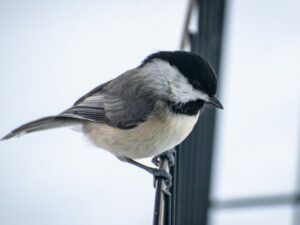
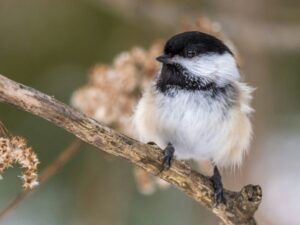
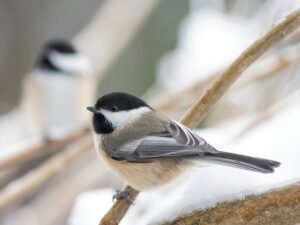
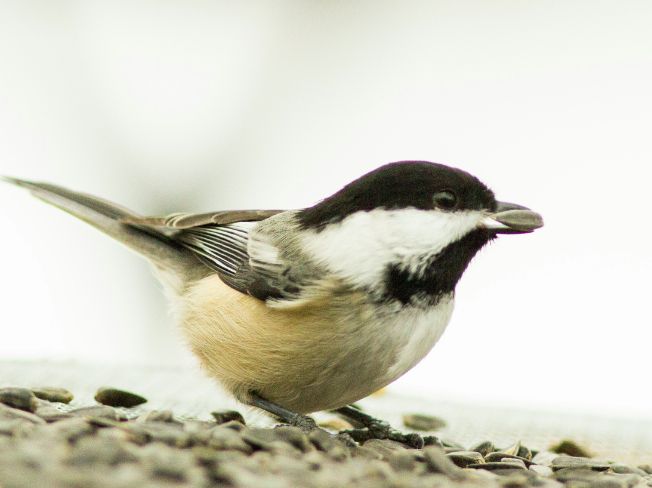
Chickadees
Small, friendly little balls of energy. They grab a seed and zip off fast. -
Nuthatches
The ones that scoot down tree trunks headfirst. They look like they’re always in a hurry. -
Downy woodpeckers
They’ll cling to suet and work at it like it’s their morning job. -
Common redpolls (some winters)
Tiny birds with little red caps, often in small groups. When they show up, it makes the yard feel lively. -
Pine grosbeaks (once in a while)
Not an everyday visitor for me, but when they come through, that soft rosy color is something else.
What I like about watching from the kitchen table is that you can share it easily. One of you notices movement, the other looks up, and suddenly you’re both smiling at the same little scene. It’s simple companionship. Not too bad at all.
A Few Practical Tips for Couples Who Want an Easy, Quiet Routine
I’ve noticed that couples do best with this when it feels like part of the day, not an extra job. Here’s a small routine that works well for a lot of folks around here.
A low-effort morning routine
-
Take a quick look outside while the coffee’s brewing.
Just a glance. See what’s moving. -
Refill only if it’s easy and needed.
No heroics. If it’s icy and windy, it can wait. -
Keep the feeder stocked in small amounts.
Enough for a day or two is plenty in winter. -
Pick one “bird moment” to share.
Maybe it’s a cardinal. Maybe it’s a woodpecker. Just point it out and enjoy it together for a minute.
A few do’s and don’ts I learned the hard way
-
Do keep things close enough to see clearly.
-
Do choose a feeder you can open with cold hands.
-
Don’t put out too much seed before a storm.
-
Don’t feel like you need to identify everything right away.
-
Do let it be simple and quiet.
I used to think I needed to know every bird name, every habit, every detail. Now I’m happy just knowing “the little red one came back” or “those tiny busy ones are here again.”
Why This Matters More to Me Now Than It Used To
I’m 68, and I don’t move as fast. I don’t rush through mornings the way I once did. Some of that is age. Some of it is just learning what I actually want out of a day.
What I want, most days, is steadiness. A warm kitchen. A view of the yard. A small sign that life keeps moving even when it’s cold and the days are short.
Watching birds from the table fits that perfectly. It gives me something real to notice. Something gentle. Something that doesn’t demand much from me.
And it does something else, too. It gives you and your spouse a small shared moment. Not a big conversation. Not a grand plan. Just a quiet little pause together. A “Did you see that?” kind of thing.
In a northern winter, those small shared moments feel bigger than they used to.
A Quiet Closing Thought From My Kitchen Window
By late afternoon in Duluth this time of year, the light fades fast. It’s like the day folds itself up early. I’ll often be at the kitchen table again, maybe with a cup of tea, and I’ll look out and see the yard settling down—snow piled along the fence, pine branches holding still, the neighborhood getting quiet.
Sometimes a bird makes one last visit before dusk. A cardinal flashing red for a second. A chickadee darting in and out like it’s squeezing in one last errand. And I’ll just sit there and watch, grateful that I don’t have to chase those moments. They come right to the window if you set things up kindly.
If you’re an older couple, or just folks who like a calm home life, I’d encourage you to try it in your own way. Keep it simple. Keep it close. Let the birds bring a little color to the day while you sit warm at the table.
In a Duluth winter, with the wind sometimes coming off Lake Superior and the daylight feeling precious, those tiny backyard visitors can make an ordinary morning feel pretty special.