Folks ask me how to tell them apart when the birds won’t sit still and you don’t want to mess with binoculars. Fair question. Most of us just want easy spotting without extra gear—a quick “Oh, that’s you again” while we’re looking out the window or stepping onto the deck for a minute.
Here’s the good news: you can sort out a chickadee and a nuthatch with a few simple tells that don’t require a fancy feeder setup or perfect eyesight. If you can notice how a bird moves, where it puts its feet, and the one habit it repeats every time, you’re basically there. I’ve even watched folks do it from the kitchen sink window while the squirrels are trying to audition for the circus. The trick is to stop chasing field marks and start watching “behavior marks.”
Start With Movement, Not Markings
When people get stuck on colors, they miss the most reliable clue: the bird’s “style.”
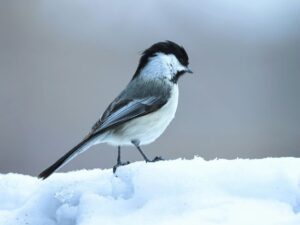
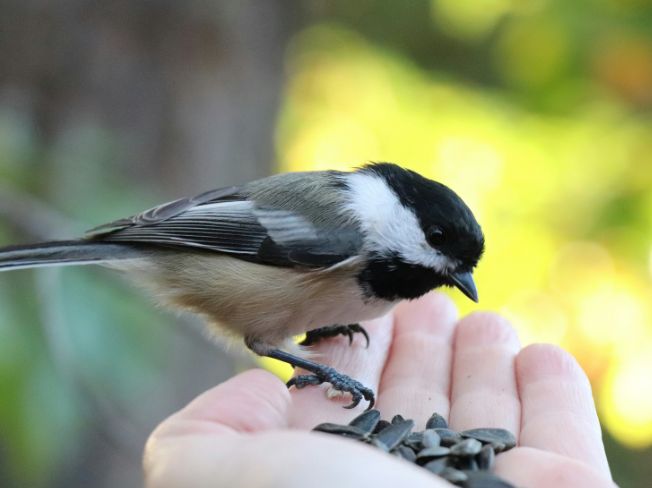
Chickadee style: quick, bouncy, flitty—like it’s sampling everything.
Nuthatch style: deliberate, hustling—like it’s on a route and has places to be.
Here’s a quick checklist you can use from 10–15 feet away:
-
Bouncy hops in short bursts → usually chickadee
-
Straight-line crawling along bark → usually nuthatch
-
Pauses to “scan,” then darts → chickadee
-
Keeps moving and checking cracks → nuthatch
If you only remember one thing, remember this: chickadees hover and hop, nuthatches crawl and probe. That’s the backbone of easy spotting.
Where They Hang Out: Feeder vs Tree Trunk
If you’ve got a feeder near a fence line or a tree, you’ll see both. They just use your yard differently.
Chickadees: “Grab-and-go” at the feeder
Chickadees love quick visits. They’ll land, grab one sunflower seed, and pop to a nearby branch to open it. They look like they’re doing errands—quick stop, then off.
Nuthatches: “Work the trunk”
Nuthatches treat your trees like a pantry. They’ll walk down a trunk headfirst (yep, headfirst) and check bark creases like a mechanic checking a dashboard.
No binoculars trick:
If you see a small bird going down a trunk headfirst, you’re almost certainly looking at a nuthatch. Chickadees can land on trunks, but they rarely make a habit of that headfirst descent.
And if you’re wondering about other visitors while you’re watching: downy woodpeckers will also work trunks, but they have that woodpecker posture and a more “peck-and-pause” rhythm.
Chickadee vs Nuthatch Sounds You Can Learn Fast
You don’t need a perfect ear—just a couple of “signature” sounds.
Chickadee
-
The classic “chick-a-dee-dee-dee” scold (often when a hawk or cat is around)
-
A clear, sweet two-note whistle in many regions (sounds like “fee-bee”)
Nuthatch
-
A sharper, nasal call—many folks describe it as “yank-yank” or a squeaky toy
Easy spotting without extra gear gets easier when you pair sound with motion. If you hear that nasal “yank” and then see a bird hustling along bark, you’ve got a nuthatch.
A Simple 30-Second Routine From Any Window
This is my favorite method because it’s realistic—especially if your knees aren’t thrilled about standing outside. (Mine aren’t; after about 12 minutes my knees start lobbying for a chair.)
Try this little routine:
-
Pick one viewing spot (kitchen window, living room chair, or by the garage door).
-
Watch the feeder area first for 10 seconds: who pops in and out fast?
-
Shift your eyes to the nearest trunk or thick limb for 10 seconds: who crawls?
-
Listen for one call during the next 10 seconds.
-
Decide using only these questions:
-
Did it bounce around? (chickadee)
-
Did it crawl the bark? (nuthatch)
-
Did it go headfirst down? (nuthatch)
-
That’s it. You’re not trying to write a bird guide—you’re just naming the visitor correctly.
The “Wrong Try” Most People Make
Here’s the trap: folks try to confirm identity by color alone.
A chickadee and a nuthatch can both look like “gray and white little birds” at a glance, especially in shade or through glass. Then the brain fills in the rest and you get confident… about the wrong bird.
I used to do the same thing. I’d see a flash of white and think “chickadee,” then later realize it was a nuthatch doing that trunk-run the whole time. Once you switch from “What color is it?” to “What job is it doing?” you stop getting fooled.
Common Look-Alikes and How to Rule Them Out
Your yard probably hosts a whole cast. Here are the usual suspects that complicate the picture:
Downy Woodpecker
-
Hangs on trunks like a nuthatch, but pecks and braces with a stiffer posture.
-
Often visits suet steadily.
Tufted Titmouse (depending on your area)
-
Similar size and feeder behavior to chickadees, but has a crest and a chunkier look.
White-breasted vs Red-breasted nuthatch
-
White-breasted tends to look cleaner and larger; red-breasted has warmer tones and can feel “busier.”
-
Both do the trunk-crawl thing that screams “nuthatch.”
House Finch, Dark-eyed Junco, Northern Cardinal
-
These are feeder regulars in many US neighborhoods, but they don’t do the bark-crawl routine.
-
Juncos are ground-oriented. Cardinals are larger and unmissable.
If you only want one quick elimination rule: bark-crawling = nuthatch/woodpecker territory. Quick seed grab and branch opening = chickadee/titmouse territory.
Troubleshooting: 5 Common Problems and Fixes
Sometimes the birds don’t cooperate. Here are the usual issues and what to do.
-
Problem: “They’re too fast; I can’t focus.”
Fix: Watch where they return. Chickadees often grab and retreat to the same twig. Nuthatches loop the same trunk like it’s a track. -
Problem: “Glare on the window.”
Fix: Step a foot to the side or turn off one indoor light. A small shift makes a big difference. -
Problem: “Squirrels take over the feeder.”
Fix: Offer a separate squirrel-friendly option away from the main feeder, or switch to a baffle. Reality is squirrels don’t read rules. -
Problem: “Raccoons show up at night and wreck things.”
Fix: Bring feeders in after dark or use sturdier hanging hardware. Raccoons are clever and persistent. -
Problem: “I can’t stand outside long—tired legs.”
Fix: Set a chair inside at your best window and keep the feeder within a clear line of sight. Put it where you can see it without twisting your back.
I changed my mind halfway through installing one feeder pole, and now there’s a useless bracket in my garage.
Comfort Upgrades That Help More Than Binoculars
If you want upgrades, start with comfort and positioning before gear.
Placement upgrades
-
Put the feeder 6–10 feet from a window so you can see behavior clearly.
-
Keep it near a limb or shrub so chickadees have a retreat spot.
Simple feeder choices (USD ranges)
-
Basic tube feeder: $15–$35
-
Suet cage: $5–$15
-
Pole baffle: $20–$50
Seed choices that make ID easier
-
Black oil sunflower brings chickadees reliably.
-
Suet brings nuthatches and woodpeckers reliably.
If your hands don’t love fiddly latches—grip issues are real—pick feeders with larger, simple hooks and lids you can open without wrestling them.
Why This Works for Easy Spotting Without Extra Gear
Field guides love tiny details: eye lines, feather edges, subtle tints. Those are great… when the bird sits still at eye level.
In real backyards, birds move. Glass reflects. Light shifts. Your attention is split because a neighbor’s dog is barking or you’re watching a squirrel do parkour off the fence.
Behavior doesn’t change much with lighting. A nuthatch will still run the bark. A chickadee will still bounce, grab, and retreat. That’s why focusing on movement, perches, and routine gives you reliable ID from a distance—no binoculars needed.
Ending: Getting Confident One Visit at a Time
If you take nothing else from this, take the pressure off. You don’t have to name every bird on the first pass. Start with two: the bouncy seed-grabber and the trunk-runner. Over a week or two, you’ll notice patterns—who shows up first, who hangs back, who works the suet, who uses the same branch like a workbench.
On days when your legs are tired, keep it simple: watch for 30 seconds from the window, then move on with your day. The birds will be back. Chickadees tend to make repeat visits, especially if your feeder is steady. Nuthatches often do circuits, and once you recognize that headfirst trunk move, you’ll spot them almost automatically.
Give yourself permission to learn by repetition. That’s how most of us do it—one ordinary yard visit at a time, with a few practical tells that actually work in real life.