
The other morning here in Duluth, the kind of December morning where the sky is still gray even after you’ve poured your first cup of coffee, I shuffled into the kitchen and felt that familiar draft from the window over the sink. The house was quiet. The heat had just kicked on, making that soft humming sound in the vents, and I could see my own faint reflection in the glass.
Out beyond the backyard, the pine trees were dusted in snow, not a fresh storm, just that steady winter layer that hangs around up here for months. I could tell the wind was coming off Lake Superior again, because the snow on the garage roof had that sculpted look it gets when the gusts have been pushing it around all night.
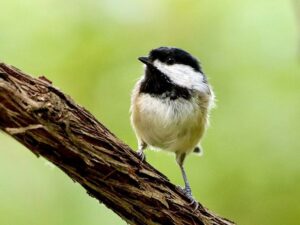
As I stood there, holding my warm mug, a little black-capped chickadee landed on the feeder hook by the kitchen window. He looked about as puffed up as I felt in my winter coat the day before. A second later, a red-bellied woodpecker slid in, grabbed a quick bite of suet, and darted back to the maple tree.
My wife wandered in, wrapped in her old blue robe, and leaned against the counter next to me. We both just stood there for a minute, watching that small bit of life outside the glass. To be honest with you, these days neither of us is racing out the door early for work, and our legs aren’t what they used to be, so the idea of just standing in a warm kitchen, enjoying the birds without even putting on boots, feels pretty nice.
That morning got me thinking about how many retired couples could enjoy the same kind of slow, easy bird-filled start to the day without needing to tromp through snow or drive out to a park. Just a window, a feeder or two, maybe a light pair of binoculars, and a bit of patience.
How My Wife and I Drifted Into Window Birdwatching
We didn’t start out with any grand plan. For years, our mornings were more about packing lunches, checking the weather, and making sure we got out of the driveway before the plow left a snowbank at the end.
Once life slowed down, our mornings got a little longer. Wake up, check the clock, realize we don’t actually have to get up yet. Eventually we’d wander into the kitchen anyway, mostly out of habit. I’d make coffee, my wife would putter around with the toaster, and we’d stare out the window the way people watch the morning news.
At first, there wasn’t much to see. A couple of squirrels, maybe a crow or two flying over the neighborhood. The backyard looked bare and kind of empty in the winter light.
One day I told my wife, “You know, if we put a feeder closer to this window, we might have a better show than the TV.” She laughed, but that weekend we drove down one of those quiet residential streets to the little hardware store and picked up a basic feeder and a small bag of black oil sunflower seeds.
We hung the feeder on a pole in the yard at first, a little too far from the house. I thought the birds might be scared of the window. Turns out they were more interested in the pine tree across the fence than our new setup. We would stand there in the kitchen, coffee cooling in our hands, staring at an empty feeder.
It took a while, and a little bit of trial and error, before we figured out how to make that kitchen window feel like the front row of our own small bird show.
What I Tried First and How It Turned Out
The first mistake I made was distance. I put the feeder way out in the yard, thinking the birds would feel “safer.” In my head, I was trying to think like a bird. In reality, I was just making it harder for my older eyes and my stiff neck.
I’d squint through the glass and say, “I think that’s a nuthatch,” and my wife would say, “Well, I think that’s just a leaf.” You know what I mean.
Here’s what I learned from those early tries:
-
If the feeder is too far, you don’t see much detail.
-
If it’s in a bad spot, the squirrels will use it like a buffet with a built-in gymnastics course.
After a few weeks of feeling like we had a very quiet restaurant with no customers, I decided to move the whole setup.
It was a chilly afternoon, that kind where the air nips at your fingers before you’ve even finished putting on your gloves. I went out and shifted the feeder pole closer to the house, almost under the kitchen window. Not pressed right against it, but close enough that, when I looked from inside, I could see the perch without straining.
I also added a small suet cage on the side of the pole, because folks around here kept telling me that woodpeckers and nuthatches love suet, especially when the temperatures drop and the days get short.
The result surprised me. Within a few days, we started seeing:
-
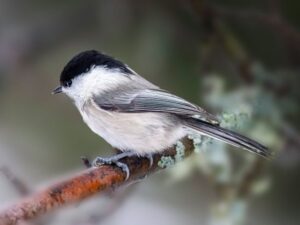
Chickadees in little flocks, coming and going like they were on a schedule.
-
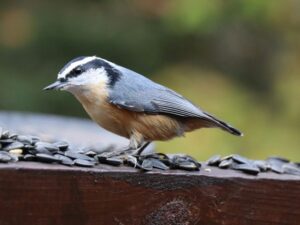
Nuthatches hopping down the pole headfirst, which always makes me smile.
-
Blue jays dropping in now and then with that loud voice, as if they’re announcing themselves.
-
The occasional downy woodpecker, tapping away at the suet with real focus.
From the kitchen, those birds felt close enough that we could really see them, even without fancy equipment. It was like the backyard had finally started talking back to us.
Small Adjustments That Made Our Mornings Easier
Once the feeder was in a better spot, the next thing I had to figure out was comfort. At 68, I don’t stand as long as I used to. My knees like to remind me I’ve lived a full life.
We made a few simple changes that turned those morning minutes into something we could enjoy every day, not just once in a while.
Making the Kitchen Window a Little “Bird Corner”
We did three things that helped a lot:
-
Pulled a sturdy chair up near the window.
We picked one with arms, so it’s easier to get in and out of. Now one of us can sit while the other stands, and we switch off. Standing for ten or fifteen minutes isn’t too bad, but sitting with a cup of coffee, watching the feeder, feels like a real routine. -
Kept a light pair of binoculars on the counter.
Nothing fancy. Just something small that you can raise with one hand. When a bird lands and you want a closer look, having them right there makes all the difference. No digging through closets or going to another room. -
Put the seed and suet in a nearby cupboard.
The less walking back and forth we do in winter boots on icy steps, the better. I keep a scoop right in the seed container, so filling the feeder is a quick little job, not a whole production.
We didn’t turn the kitchen into some kind of nature center or anything. Just a couple of small changes so that watching birds fits naturally into making toast, pouring coffee, and talking about the day.
A Little Checklist That Helps Us
Here’s a simple list we settled into, especially useful when the sidewalks are icy and we’d rather not slip:
-
Keep at least one feeder where you can see it clearly from the kitchen.
-
Choose one seed that works for many birds, like black oil sunflower.
-
Add a suet cage in winter to bring in woodpeckers and nuthatches.
-
Keep feeders close enough that you don’t need to strain your eyes.
-
Leave a chair, binoculars, and maybe a small notebook within reach.
None of this is complicated. It just took us a while to realize how much easier mornings get when you set things up once and then simply live with it day after day.
A Small Change That Made a Big Difference
One of the biggest turns in our little window routine came from a simple change: switching seed.
For a while, I bought whatever mixed birdseed was on sale. You know the kind — looks good in the bag with all the colors. What I noticed, standing there in my slippers watching the feeder, was that the birds kept tossing a lot of it onto the ground. The chickadees and nuthatches dug around for the sunflower seeds and left the rest.
The ground underneath the feeder started to look messy. The squirrels were happy, but we weren’t seeing as many songbirds as I hoped.
One week, when the wind off the lake felt especially sharp and I could see my breath just stepping out to the mailbox, I decided to try a different approach. I bought a bag of straight black oil sunflower seeds and a separate suet cake.
Here’s what changed after a week or two:
-
The feeder emptied at a gentler, steadier pace.
-
The birds spent more time actually eating than tossing seeds.
-
We saw more chickadees, a few cardinals, and regular visits from woodpeckers.
-
There was less waste on the ground.
The best part was how it changed our mornings. Now, when we stand at the window with our coffee, there’s almost always some activity. Even on those really cold Duluth mornings, when the sky is pale and the sun doesn’t climb very high, there’s usually a little parade of birds taking turns.
I noticed my mood lifting, too. Some days my joints ache more than others, or I wake up feeling a little worn down. But when I see a chickadee hop across the feeder or a blue jay flash by in that bright blue, something in me feels lighter. It’s a small thing, but it adds up.
Little Lessons I Picked Up Along the Way
After a few winters and springs of doing this, a few gentle lessons keep coming back to me. Nothing fancy, just small truths that seem to fit this stage of life.
1. You Don’t Need the Perfect Setup
I used to think I needed just the right feeder, the exact right seed, maybe a special book on local birds. Now I see it doesn’t have to be perfect.
If you have:
-
One decent feeder
-
One type of seed that birds like
you already have enough to start. You can always tweak things later.
2. Work With the Season, Not Against It
Here in Duluth, winter sticks around. The sun comes up late, and sometimes it feels like the day barely gets going before it starts getting dark again. Instead of fighting that, I’ve tried to shape our little window routine around it.
In winter, our bird time is later in the morning, once the light is up a bit. The birds seem more active after the sun has warmed things even a little. In summer, when the mornings get bright early and the air feels softer, we might be in the kitchen right after sunrise, watching the action before the day heats up.
The birds change with the season too. In the colder months, it’s chickadees, nuthatches, jays, and woodpeckers mostly. When the snow finally melts and the neighborhood parks turn green again, we start seeing different visitors. Each season feels like a new chapter, right there outside the same window.
3. Make It Something You Share
One of the nicest parts of this whole kitchen window habit is sharing it with my wife. We don’t make a big ceremony of it. Sometimes she’ll call out from the kitchen, “Your woodpecker friend is back,” and I’ll wander in. Other times I’ll be standing there and say, “You should see this cardinal,” and she’ll join me for a minute.
For couples our age, when the pace of life is slower and the days can blur together a bit, having this simple shared thing — just watching birds in the quiet of the morning — gives the day a friendly starting point.
How This Fits Into My Life Now at This Age
At 68, I move slower. Some mornings my knees feel stiff, or I’m a little tired before the day even starts. I don’t hike like I used to, and walking across an icy parking lot downtown can feel like enough adventure for one day.
That’s part of why I value this window routine so much. I don’t have to push my body harder than it wants to go. I can stand or sit in a warm kitchen, look out at the snow on the fence, see the breath of a blue jay puff out in the cold, and feel connected to the world without leaving the house.
The light over Lake Superior changes a lot through the year. Some mornings the sky is pink, reflecting off the snow and the rooftops; other days it’s just gray and low, with a bite in the air. No matter what the weather is doing, the birds show up in their own way, on their own schedule.
There’s something comforting about that. In this season of life, with more years behind me than ahead, regular little moments of beauty feel more important. They don’t have to be big trips or expensive hobbies. Sometimes it’s enough to stand at a window with someone you’ve spent decades with and say, “Look at that little guy,” and both smile.
A Quiet Word to Anyone Just Getting Started
If you’re retired, or close to it, and thinking your body doesn’t quite have the energy it used to, you might find a lot of peace in a simple morning habit like this. A small feeder, some seed, a window that looks out on a quiet backyard — that’s plenty.
Set things up so you don’t have to work too hard:
-
Keep everything you need nearby.
-
Let the birds come to you instead of chasing them.
For me, up here in Duluth, with the long winters and the snow piling up along the quiet streets, these gentle bird-filled mornings at the kitchen window have become a real anchor. They remind me that life still has small surprises, that the world keeps moving even when I’m standing still in my slippers, and that there is still a lot to enjoy right where I am.
If you give it a try, I hope you find your own little bit of comfort in those soft morning minutes, watching the world wake up just beyond the glass.