Most mornings these days, I start the day the same way. I shuffle out to my little porch here in Duluth with a cup of coffee, feel out the temperature with my bare hand on the railing, and take a slow look around. Early winter up here has a certain feel to it. The sky hangs low, kind of a soft gray, and you can almost taste the cold in the air.
Even a few blocks back from Lake Superior, I can feel that damp chill that comes off the water. The boards under my feet are cold and a little stiff, and there’s often a thin dusting of snow sitting on the rail. The pine trees down the street look dark and quiet, and the neighborhood feels like it’s moving a little slower, just like I do at this age.
One morning not long ago, I was standing there, rubbing some warmth into my fingers, when this bright flash of red landed on a small tree near a neighbor’s apartment building. A male cardinal. Against all that white snow and gray sky, he looked like someone had dropped a tiny ember into the branches. A minute later, a little group of goldfinches flitted over to a balcony feeder, all puffed up against the cold.
Watching that, I started thinking about folks who don’t have a big yard or a whole lot of trees. A lot of people my age end up in small apartments or condos. Maybe they just have a narrow patio or a small balcony with a couple of chairs squeezed in. I hear the same question all the time:
“Can you still see pretty colorful birds from a small place like that?”
From what I’ve seen here in Duluth, the answer is yes. You might be surprised how much color can show up outside a modest patio door, if you give the birds a reason to stop by and you know who to look for.
My Early Mistake: Thinking You Needed a Big Backyard
When I first started paying closer attention to birds, I kind of assumed you needed a big backyard to do it “right.” You know, tall trees, bushes, maybe a little garden with flowers, the whole postcard scene.
Years ago, when I downsized and found myself with a smaller space, I remember standing on a cramped balcony, looking out over a parking lot and a few scraggly trees, thinking, “Well, that’s that. Guess the colorful birds belong to people with bigger places.”
Turns out I was wrong.
The first thing that changed my mind was a simple feeder. Nothing fancy, just a small one hooked on the railing with some mixed seed in it. I didn’t expect much. But one chilly spring morning, I opened the door and there were two bright yellow American goldfinches clinging to that little feeder, swinging slightly in the breeze.
The air was still cold enough to bite, and I could hear the faint hush of traffic mixed with the distant sound of the lake, but those tiny birds looked like someone had planted little suns right there on that small balcony. They didn’t care that there wasn’t a big yard below them. All they cared about was food, safety, and a half-decent perch.
That was the first time I really understood that space doesn’t have to be big to be interesting, for us or for the birds.
Bright Visitors You Might See from a Small Minnesota Patio
Let me walk through some of the colorful birds I often see around Duluth and other Minnesota neighborhoods, the kind you can spot right from an apartment patio or little balcony. You don’t need a forest. You just need to know who you’re looking at and what they like.
Northern Cardinal – A Red Spark in the Snow
If there’s one bird that makes winter feel less gloomy, it’s the northern cardinal. The males are bright red with a little crest on their head, and a black mask around the face. The females are more of a warm brown with hints of red on the wings and tail, and they’re beautiful in a quieter way.
Even in apartment complexes, I’ve watched cardinals hop around shrubs, sit on railings, and visit small feeders hanging off balconies. They like sunflower seeds, especially the black oil kind.
If you’re in a small place and you’d like to see them:
Use a small feeder that can attach right to a railing or hang from a bracket.
Fill it with black oil sunflower or a decent mixed seed.
Try to place it near a bit of cover if you can—maybe a tree, a tall shrub, or even a cluster of potted plants.
On those gray Duluth mornings when the sun is slow to rise, seeing that red bird land on a balcony rail is pretty nice, I have to say.
American Goldfinch – Yellow Drops of Sunshine
Goldfinches are another favorite of mine. In summer, the males are bright yellow with a black cap and black wings, like little flying lemons. The females are softer in color, more olive, but still lovely. In winter, they lose some of that bright yellow and turn more muted, but you can still see hints of color, especially when they gather in small flocks.
I’ve seen goldfinches all over town: in parks, in little backyards, and yes, at tiny apartment patios where someone put out a simple tube feeder. If you offer nyjer (thistle) seed or small sunflower chips, they’re likely to show up at some point, especially once the weather warms a bit and days grow longer.
They move in that bouncy flight pattern, kind of up-and-down as they go, and their voices sound cheerful, even on a cold day. When you’re sitting on a small patio chair with your knees creaking a bit, that cheerful sound feels like a little pick-me-up.
Blue Jay – A Loud Splash of Blue
Blue jays are not exactly shy. They’re bigger than the finches and chickadees, and they like to make their presence known. The blue, white, and black pattern on them stands out strongly, even from a distance.
I’ve watched them hop around on apartment lawns, land on balcony railings, and raid any feeder they can manage. People either love them or find them a bit bossy. Me, I kind of enjoy the drama. They’re smart birds, and very pretty when the light hits them right.
From a small patio, you don’t have to do anything special to attract them. If there’s food available—peanuts, sunflower seeds, even suet—they’ll probably figure it out. Just be ready for them to scatter the smaller birds now and then. That’s one of those “take the good with the bad” things in life, you know what I mean.
House Finch and Purple Finch – Soft Reds and Rosy Tones
In neighborhoods around Duluth and many parts of Minnesota, I’ve seen house finches turning up at apartment feeders, especially closer to town. The males have a rosy red color on the head and chest, and the rest of the body is streaky brown. Purple finches look similar but a bit more washed in wine-red over the body.
From a small patio, both of these can show up if you offer sunflower seeds or a good general seed mix. They’re not as bold as the jays, but they’re not as timid as some other birds either. When a male finch sits on the edge of a flower pot or a railing in that rosy color, it adds a nice soft splash to the day.
Smaller Birds That Add Their Own Kind of Color
Now, if we stretch the word “colorful” a little bit, there are some smaller birds that may not be neon bright but still bring a lot of life to a small patio:
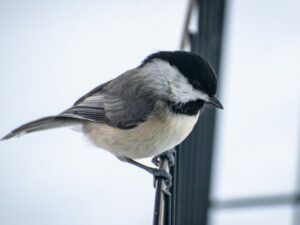
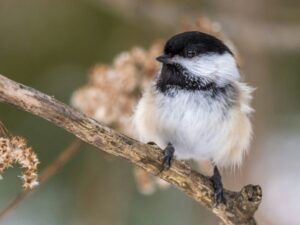
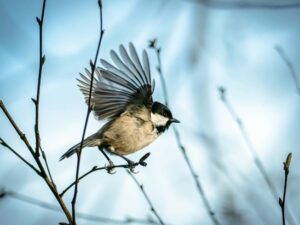
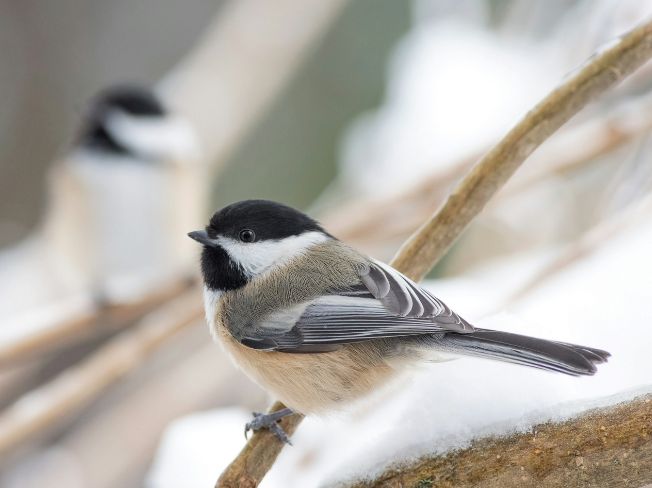
Black-capped chickadees – with their black cap and bib and white cheeks, they look sharp and clean, and they’re charming little visitors.
White-breasted nuthatches – bluish-gray backs, white faces, and a habit of creeping headfirst down tree trunks or even down the side of a building.
Dark-eyed juncos – slate-gray backs with white bellies; in winter, they hop around underneath feeders cleaning up spilled seed.
They may not be as flashy as a cardinal, but in the quiet of a winter morning or a soft spring day, their patterns and movement add plenty of interest.
Making a Small Patio Welcoming for Colorful Birds
At my age, my body doesn’t love long hikes in deep snow the way it might have when I was younger. I still enjoy getting out to the parks now and then, but most days I prefer a short walk and a comfortable chair. A small patio suits me just fine.
Over time, I’ve learned a few simple tricks to make a small space more attractive to colorful birds without making it complicated for myself.
Keep Things Simple and Safe
Here are a few things that have worked for me and for friends who live in apartments or condos:
Use one or two small feeders, not a whole cluster.
Too many feeders can get cluttered and harder to maintain. A single tube feeder and maybe a small tray or suet cage is usually enough.Choose food that appeals to colorful species.
Sunflower seeds, nyjer, and good quality mixed seed will draw cardinals, finches, and others. You don’t need exotic blends.Watch your footing.
In a Minnesota winter, even a small patio can be slick. I move slowly, wear shoes with good grip, and keep the main standing area clear of ice and seed.Think about window safety.
If your patio is right by a large window, try to keep feeders either very close to the glass (within a few feet) or a bit farther away, so birds don’t build up too much speed if they misjudge the reflection.
A Small Change I Made That Brought More Color
There was a time when I had my feeder hung way out toward the open side of the porch, almost like I was trying to stretch it out into the yard that I don’t really have. It looked nice to me, but the birds didn’t seem too sure about it. They’d come in, grab a seed, and bolt.
One spring, as the snow was melting and the sidewalks were finally starting to show concrete again, I decided to move things around. I loosened the bracket and shifted the feeder a couple of feet closer to the building, near a corner where there was a little more shelter from the wind. I also put a couple of pots with simple plants in that corner once the weather warmed up.
The result surprised me:
Cardinals started staying a bit longer, taking time to crack seeds and look around.
Goldfinches visited in small groups instead of just one bird at a time.
The smaller birds, like chickadees and nuthatches, seemed more relaxed, darting back and forth without looking quite as nervous.
That minor adjustment—just moving the feeder closer to a sheltered corner—made the whole patio feel more alive. For me, it meant I could sit there, back against the wall, a little out of the wind coming off Lake Superior, and watch the colors move right in front of me.
Little Tips for Seeing More Color Without Working Too Hard
Folks around here, especially the older ones like me, don’t always want complicated projects. We’ve done our share of heavy lifting. So I like to keep my suggestions pretty simple. If you’ve got a small patio in Minnesota and you’d like to see more colorful birds, here are a few down-to-earth ideas:
Start with one feeder and one type of seed.
You don’t have to build an entire bird buffet. A single feeder with black oil sunflower will bring in a good variety, including cardinals and finches.Add a second option later if you feel like it.
If you enjoy it and have the energy, you can add a nyjer feeder for goldfinches or a suet cage for woodpeckers.Put a chair where you can sit comfortably.
Don’t stand at the window for long stretches. Find a spot where your back, knees, and neck feel okay, and you can just enjoy the show.Pay attention to the time of day.
In winter, late morning to early afternoon can be good, after things warm up a little. In spring and summer, early mornings can be wonderful—bright light, lively birds, and cooler air.Keep expectations relaxed.
Some days you’ll see a lot of color; other days it’ll just be a couple of chickadees. That’s all part of it.
At this stage in life, I’m not trying to check off species on a list. I’m just looking for small bright moments during the day. If a red cardinal lands on the rail while I’m sipping my coffee, that’s more than enough.
Why These Little Bursts of Color Matter More to Me Now
As I’ve gotten older, my world has gotten smaller in some ways. I don’t drive as far as I used to. I don’t stay out as late. Long hikes turned into short walks through nearby parks, just enough to stretch my legs and feel the air.
But in another way, my world has gotten deeper. I notice small things more: the way the light changes on a winter afternoon, the sound of the wind through pine branches, or the way a goldfinch clings sideways to a feeder.
A small patio or balcony might not look like much on a map, but from the right chair with a warm mug in your hand, it can feel like a little stage where nature puts on simple, honest shows. Bright yellow against a gray sky, deep red against fresh snow, soft rosy pink on a plain apartment railing—these things stay with you.
Living here in Duluth, with the long winters and the early snow, it’s easy to feel like the world goes a bit gray. On those days, seeing colorful birds right outside the door reminds me that there’s still a lot of life moving around, even when I’m taking things slow.
If you’re in a small place, maybe on an upper floor or tucked into a corner of a building, don’t count yourself out. You don’t need a big yard to enjoy these visitors. A simple feeder, a bit of seed, and a patient eye can bring a surprising amount of color to your days.
And if you’re around my age, maybe with knees that complain a little when the weather changes and hands that don’t like heavy lifting, I’d say this: give yourself permission to make it easy. Set up something small, where you can watch the birds without straining or rushing.
You might find that from your own small Minnesota patio, you can see more bright wings and cheerful colors than you ever expected—just by sitting still, breathing in the cool air, and letting the birds come to you.